RSSU – Retro Style Soviet Undies – Case#1 Ithaca Project
Play RSSU – Retro Style Soviet Undies – Case#1 Ithaca Project
RSSU – Retro Style Soviet Undies – Case#1 Ithaca Project Screenshots











RSSU – Retro Style Soviet Undies – Case#1 Ithaca Project review
Explore the immersive visual novel experience with retro aesthetics and investigative gameplay
RSSU – Retro Style Soviet Undies stands out as a distinctive visual novel that combines retro 1980s aesthetics with investigative storytelling. Developed by ErosAmor, this interactive fiction experience transports players to a mysterious garment factory where a young graduate named Artem uncovers unexpected adventures. The game features atmospheric world-building, engaging dialogue choices, and a unique art style that captures the essence of classic Soviet-era design. Whether you’re drawn to narrative-driven games or retro visual aesthetics, understanding what RSSU offers can help you decide if this title matches your gaming preferences.
Understanding RSSU: Gameplay Mechanics and Story Overview
So, you’ve heard the buzz about RSSU – Retro Style Soviet Undies – Case#1 Ithaca Project and you’re curious about what all the fuss is about? 🕵️♂️ Let me paint you a picture: imagine trading in your boring desk job for a position at a seemingly mundane garment factory, only to find yourself at the heart of a shadowy, fantastical conspiracy. That’s the irresistible hook of this visual novel gameplay experience. It’s not just about reading a story; it’s about living an investigation, where every dialogue choice and filed report pulls you deeper into a world where retro aesthetics hide profound secrets.
I remember firing up the game for the first time, expecting a quirky, stylized story. What I got was a gripping, atmospheric thriller that had me leaning into my monitor, analyzing every line of text and scrutinizing every pixelated poster on the wall. The genius of RSSU’s Ithaca Project story is how it masterfully blends the ordinary with the extraordinary, making you, the player, feel the same disorienting excitement as the protagonist. This chapter is your complete guide to understanding that unique magic—how you play, how the story unfolds, and how your choices truly matter.
### What Makes RSSU a Unique Visual Novel Experience? 🎭
At its core, the RSSU visual novel gameplay turns you into a detective. Forget passive clicking; this is an active, cerebral process. The game brilliantly uses its interactive fiction case files system as your primary tool. You don’t just witness Artem’s first day; you manage it. As reports, memos, and strange technical documents land on your (virtual) desk, you must read, cross-reference, and log key information. It feels less like playing a game and more like conducting a real investigation, where paying attention to the smallest bureaucratic detail can unlock a major story branch.
This investigatory spine is brought to life through its dialogue analysis visual novel mechanics. Conversations here are puzzles. Characters have agendas, they lie by omission, and their word choices are clues. 🧩 You’ll find yourself replaying scenes not just to see a different romantic outcome, but to catch a subtle contradiction in a colleague’s statement. The game doesn’t always highlight “important” dialogue; it’s on you to determine what’s significant. This creates an incredible sense of ownership over the narrative. When I finally connected a throwaway line from a lunch break conversation to a classified project codename, the satisfaction was immense—I’d solved that part myself.
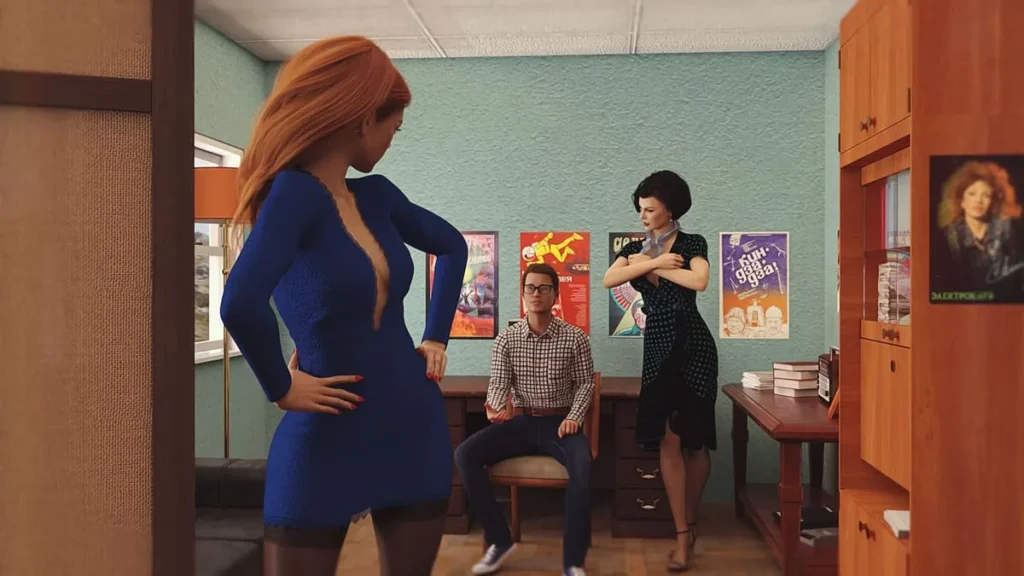
Of course, the atmosphere is half the battle. The retro Soviet aesthetic narrative is not just a pretty filter; it’s a narrative device. The stark, functional architecture of the factory, the muted yet distinct color palettes of the 80s, and the pervasive sense of state-sponsored order all create a powerful backdrop. This aesthetic lulls you into a specific rhythm before the game introduces its fantastic elements. The tension between the drab, everyday reality of sewing machines and the shimmering, impossible technology in the hidden labs is where the story’s heart beats strongest. It’s a world that feels historically grounded yet thrillingly alien.
The gameplay is a careful balance between three core pillars:
* Investigation: Scouring case files and the environment for clues.
* Dialogue: Engaging in tense, flirtatious, or deceptive conversations where choices have weight.
* Relationship Management: Navigating the complex web of personal and professional loyalties with other characters.
These pillars are supported by subtle but crucial mechanics like a support system from certain allies and resistance elements when your inquiries become too pointed. It’s a constant, engaging juggling act that defines the RSSU visual novel gameplay.
| Gameplay Pillar | Primary Activity | Player Skill Tested |
|---|---|---|
| Case File Analysis | Reading, logging, and connecting information from documents. | Attention to Detail & Logical Deduction |
| Dialogue Navigation | Choosing responses, analyzing speech for truth and intent. | Social Insight & Role-playing |
| Relationship Building | Managing trust and rapport with key characters through choices. | Empathy & Strategic Planning |
### The Ithaca Project: Unraveling the Central Mystery 🔍
Now, let’s dive into the rabbit hole: the Ithaca Project story. You play as Artem, a bright-eyed graduate who arrives at the RSSU factory for what he believes is a simple engineering job. The first few in-game days beautifully establish this “ordinary” life—meeting coworkers, learning the layout, dealing with minor workplace dramas. But the cracks begin to show almost immediately. Whispers in the hallways don’t match the official memos. Certain corridors are conspicuously off-limits. The factory’s military oversight feels… excessive for underwear production.
Tip: Don’t rush through the early “mundane” sections! The Ithaca Project story seeds its biggest mysteries in these seemingly boring documents and casual chats. That gossip about the “night shift” or the technical manual with a few pages mysteriously redacted? Textbook clues.
The moment you—and Artem—realize that the RSSU factory is a front for something staggering is a masterclass in video game storytelling. The retro Soviet aesthetic narrative plays a key role here; the discovery of advanced, almost otherworldly technology feels even more shocking and illicit against the backdrop of austere Soviet realism. This isn’t just a sci-fi story; it’s a period-piece sci-fi story, which makes the central question so compelling: what is the true purpose of the Ithaca Project, and why is it hidden here?
The mysterious laboratory setting is the physical manifestation of this core conflict. One moment you’re in a room smelling of old fabric and machine oil, the next you’re descending into a sterile, high-tech facility that feels like it belongs in another century. This jarring contrast is the game’s primary source of atmospheric tension. The narrative structure expertly weaves together multiple storylines: Artem’s personal adaptation, his evolving relationships, the workplace politics of the surface factory, and the deep, dark secrets simmering underneath. Just when you think you’ve grasped one thread, another pulls taut, leading to surprising plot developments that kept me playing “just one more day” deep into the night.
### Character Development and Investigative Choices 🧭
Everything in RSSU filters through the lens of Artem, making his protagonist character development the vehicle for your entire experience. Artem starts as a capable but naive newcomer, and his journey—shaped entirely by your investigative choices game mechanics—is one from confusion to determined curiosity, and potentially, to revelation or ruin. Will he be a cautious rule-follower, a reckless truth-seeker, or a shrewd manipulator playing both sides? The game tracks your consistent behavior, and characters will react to the reputation you build.
This is where the magic of player agency truly shines. The investigative choices game mechanics aren’t about picking “good” or “evil” dialogue options. They’re often about choosing what kind of investigator you are. For example:
* Do you confront a suspicious supervisor directly, risking their ire but potentially forcing a revealing reaction?
* Or do you quietly gather more evidence from their subordinates, taking longer but building a more solid, covert case?
* Do you share a crucial finding with a potential romantic interest to build trust, or hoard information to maintain an advantage?
These decisions directly impact story progression. Certain pathways, character endings, and crucial pieces of the Ithaca Project story are locked behind specific investigative approaches. I learned this the hard way on my first playthrough. By being too confrontational early on, I permanently burned a bridge with a key informant, cutting off an entire subplot and leaving a major laboratory mystery unsolved. It was frustrating in the moment, but it made my second, more diplomatic playthrough feel like a completely different story.
The supporting cast is equally nuanced, serving as both potential allies and obstacles. Your relationships with them are built almost exclusively through dialogue and the consequences of your investigations. Choosing to believe one character’s testimony over another’s can shift allegiances within the factory’s social hierarchy. The promised “balance between investigation, dialogue, and intimate scenes” is real—these elements are not separate minigames but intertwined threads. A moment of personal intimacy can yield a crucial piece of information, and a professional breakthrough can deepen a personal bond. The tension between pursuing military secrets and nurturing personal relationships is the game’s central, delicious conflict.
| Character Archetype | Role in the Story | How Player Choices Affect Them |
|---|---|---|
| The Veteran Supervisor | Gatekeeper of factory secrets, potential mentor or antagonist. | Respectful, by-the-book choices earn cautious trust. Aggressive investigation triggers defensive hostility. |
| The Enigmatic Scientist | Key to understanding the lab’s technological mysteries. | Showing genuine scientific curiosity opens dialogues. Dismissing their work as “fantasy” shuts down communication. |
| The Fellow New Hire | Artem’s peer, a source of alliance or rivalry. | Collaborating on findings builds a powerful partnership. Withholding information creates a competitive, tense dynamic. |
FAQ: Common Questions About RSSU Gameplay Mechanics and Story Progression
How linear is the RSSU story?
While the central mystery of the Ithaca Project story follows a key sequence, your path through it is highly flexible. Your investigative choices game mechanics determine which clues you find first, which character subplots you unlock, and ultimately, which of the multiple endings you reach. It’s a branching narrative that rewards replayability.
Is the “dialogue analysis” aspect overwhelming?
Not at all! The dialogue analysis visual novel elements are designed to feel natural. You’re not parsing spreadsheets; you’re learning characters’ personalities and noticing when they act “out of character.” The game gives you a handy log to review conversations, so you can take your time. Think of it like being in a good detective novel—you’re picking up on tells and tensions.
Can I focus more on the relationships than the mystery?
Absolutely. The game allows for significant Artem protagonist character development through personal connections. However, the two are deeply linked. Ignoring the mystery entirely might limit how deep some relationships can go, as the secret of the project affects everyone in the factory. The most fulfilling playthroughs usually find a balance.
How long is a typical playthrough?
A single, thorough playthrough focusing on exploration and interactive fiction case files can take 10-15 hours. However, to see all the story branches and outcomes shaped by the RSSU visual novel gameplay, you’ll likely want to replay it multiple times, which can easily double or triple that time.
How important are the retro aesthetics?
Crucially important! The retro Soviet aesthetic narrative is not just cosmetic. It establishes tone, reinforces themes of secrecy and control, and makes the sci-fi elements pop with greater surprise. Immersing yourself in this unique setting is a huge part of the experience. 🏭✨
List: Key Features That Define the RSSU Experience
To wrap up this guide, let’s distill the magic of RSSU – Retro Style Soviet Undies – Case#1 Ithaca Project into its core components. This is what makes it a standout title in the visual novel genre:
- Active Detective Work: You don’t just watch an investigation; you conduct it through deep interactive fiction case files and environmental scrutiny.
- Meaningful Narrative Branches: The investigative choices game mechanics create tangible, significant forks in the road, affecting both plot and relationships.
- Atmosphere as a Character: The unforgettable retro Soviet aesthetic narrative is a masterful setting that breeds tension, curiosity, and a unique sense of place.
- Layered Dialogue: Every conversation is a potential clue in this dialogue analysis visual novel, where listening is just as important as speaking.
- A Protagonist You Shape: Witness and direct substantial Artem protagonist character development, molding him from a rookie into whatever kind of man—and investigator—you choose.
- A Mystery With Layers: The Ithaca Project story expertly blends mundane workplace drama with escalating sci-fi conspiracy, keeping you guessing until the very end.
- High Replay Value: With its branching paths and hidden secrets, the RSSU visual novel gameplay is designed to be experienced multiple times, with each playthrough offering new discoveries.
In the end, RSSU is more than a game—it’s an invitation to a specific time and place, to put on a ushanka and a lab coat, and to lose yourself in a mystery where every choice echoes through the sterile halls of a factory that is so much more than it seems. Your case file is open. The Ithaca Project awaits your analysis. 🚀
RSSU – Retro Style Soviet Undies delivers a compelling blend of retro aesthetics, investigative gameplay, and character-driven storytelling through its Ithaca Project narrative. The game’s availability across multiple platforms, combined with its distinctive art style and engaging visual novel mechanics, makes it accessible to players seeking immersive interactive fiction experiences. Whether you’re interested in the achievement system, character progression, or simply exploring the atmospheric 1980s Soviet setting, RSSU offers substantial content to discover. If you’re considering diving into this title, start by familiarizing yourself with the gameplay mechanics, take advantage of the Gallery Unlocker feature, and experiment with different dialogue choices to shape your unique experience. The game continues to evolve with regular updates, ensuring fresh content for both new and returning players.