Time Implosion
Play Time Implosion
Time Implosion Screenshots








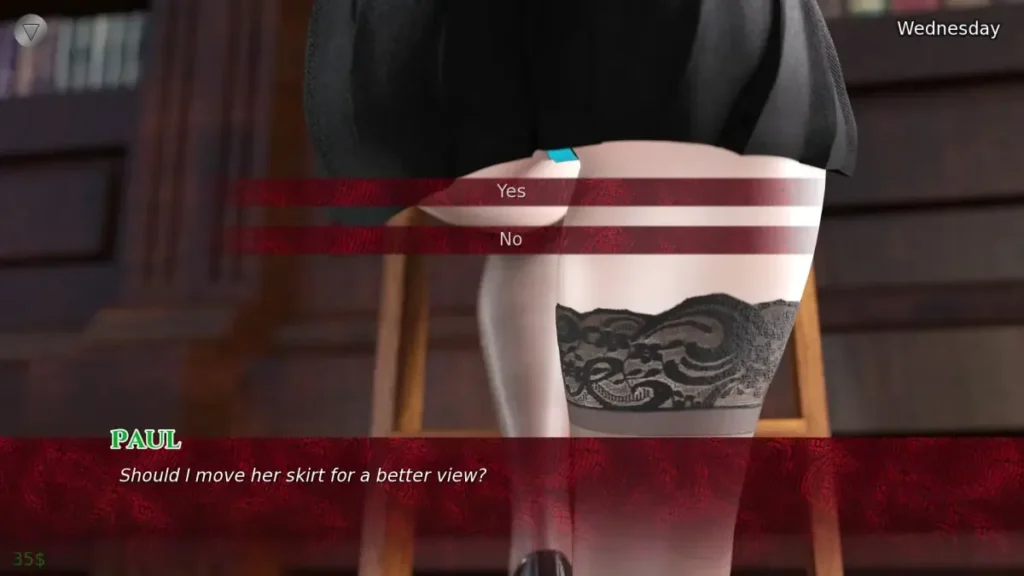





Time Implosion review
A player-focused guide and breakdown of Time Implosion’s features, story, and gameplay
Time Implosion is a narrative-driven adult-themed game that blends time-bending mechanics with character-driven scenarios, offering players both story choices and interactive sequences. In this article I walk you through what makes Time Implosion distinct, from its core loop and storytelling approach to tips that helped me get the most from several play sessions. Whether you’re curious about gameplay systems, visual presentation, or how to approach branching paths, this guide unpacks the game in practical, player-first terms.
Core Overview: What Time Implosion Is and How It Works
Let’s be real—you’ve probably seen a dozen games promise “mind-bending time travel stories.” 🕰️ Most of them are, frankly, a bit of a letdown. The mechanics are shallow, the story is predictable, and you’re left wondering what the big deal was. I was fully prepared for Time Implosion to be another one of those. I clicked “play” with a healthy dose of skepticism.
Two hours later, I was utterly hooked. My notebook was a chaotic mess of scribbled theories, and I had a genuine “oh wow” moment that made me immediately rewind to try a different choice. This wasn’t just a game with a time-travel skin; it felt like someone had designed the narrative and the mechanics to be two sides of the same, brilliantly warped coin. So, what exactly is it? Buckle up, because this Time Implosion overview is your guide to one of the most intriguing narrative experiences you can have right now. 🚀
What is Time Implosion? — Premise and Setting
At its heart, Time Implosion is a story-driven, choice-based experience where your ability to manipulate time is the core of both the plot and the gameplay. The Time Implosion premise is deceptively simple: you are an unnamed protagonist who discovers you have the latent ability to perceive and, eventually, alter the flow of time around a single, catastrophic event. This isn’t about hopping between centuries; it’s a deep, focused, and intimate collapse of causality around a specific point of trauma.
The setting is modern and relatable, often revolving around a central location—like an apartment building, a corporate office, or a family home—that becomes the epicenter of the temporal distortion. The genius of the Time Implosion premise lies in its intimacy. You’re not saving the world; you’re trying to save a person, unravel a personal mystery, or prevent a private tragedy. This narrow focus allows the narrative to explore complex themes of regret, consequence, and memory with a rawness that grand-scale stories often miss.
Developed by a smaller, narrative-focused studio (you’ll often find these gems from passionate indie teams), it’s built for players who crave substance over spectacle. It’s an adult narrative game, Time Implosion deals with mature themes—psychological tension, complex relationships, and moral ambiguity—with a sophistication that respects the player’s intelligence. There are no easy answers here, only compelling questions.
Key mechanics: Time manipulation and progression
If the story is the “why,” the time manipulation mechanics are the brilliant, interactive “how.” This isn’t a simple rewind button. The game introduces your abilities gradually, making you feel like you’re discovering them alongside your character. 🧠
Initially, you might only be able to slow time during a critical conversation, giving you precious extra seconds to choose your response. Then, you unlock the rewind, allowing you to jump back a few minutes, or even to key branching points, with your knowledge intact. But the real magic—and the source of the game’s name—comes from the timeline merge.
Here’s an example from my early playthrough that absolutely floored me. I was trying to get a character to trust me. In one timeline, I was honest but confrontational, and they stormed out. In another, I was gentle but evasive, and they stayed but remained closed off. The game then presented me with a “Merge” option. I selected key moments from both timelines: the honest admission from Timeline A and the compassionate tone from Timeline B. The game stitched these together into a new, third outcome where the character was shocked by my honesty but moved by my empathy, leading to a confession I never saw coming. My jaw was on the floor. This is the core of the gameplay loop in Time Implosion: experiment, observe, rewind, merge, and discover outcomes that feel genuinely emergent.
The time manipulation mechanics are seamlessly woven into the UI. Timelines are visualized as branching threads, and your “memory” of discarded paths remains, allowing you to pluck elements from them like notes from a song. Progression is measured not in levels, but in narrative clarity and the stability (or delightful instability) of the timeline you’re crafting. It creates a gameplay loop in Time Implosion that is irresistibly compelling: just one more scene to see what happens, just one more merge to try and get the “perfect” outcome.
Pro Tip: Don’t chase a “perfect” run on your first playthrough. The most fascinating and often most poignant stories in Time Implosion come from the messy, unintended consequences of your temporal tinkering. Embrace the chaos!
Visuals, audio, and presentation
The presentation of Time Implosion is a masterclass in atmospheric storytelling that supports its themes without needing a blockbuster budget. 🎨
Visual Style: The art uses a muted, slightly painterly style that feels both realistic and dreamlike—perfect for a reality that is literally softening at the edges. Character designs are detailed and expressive, with subtle changes in their appearance across different timeline stresses (a darker under-eye here, a more tense posture there) providing crucial visual cues. The interface is clean and diegetic; timeline branches look like cracks in glass or strands of fate, and your “powers” are activated through intuitive, context-sensitive controls that feel part of the world.
Audio Design: The soundtrack is a haunting, ambient companion. It swells during moments of temporal crisis and retreats to a subtle, uneasy hum during investigation scenes. The sound design is where it truly shines: the rewind mechanic isn’t silent. It’s accompanied by a reverse-muttering of voices, the unshattering of glass, a distorted tug on your senses. It makes every use of your power feel tangible and weighty. Voice acting, where present, is top-notch, delivering nuanced performances that sell the emotional gravity of the story.
Platforms & Performance: This brings us to Time Implosion platforms. The game is wonderfully accessible. You can play it directly in a modern web browser for a quick try, or download a standalone PC client for the best performance. I tested both.
| Platform | Experience | Notes |
|---|---|---|
| Web Browser | Surprisingly smooth for a narrative experience. Perfect for a first taste. | Save data is often browser-based. Use the same browser to continue your story. |
| Standalone PC (Windows/Mac) | The definitive experience. Faster loads, stable framerate, and offline play. | No heavy DRM. A simple, clean install that respects your system. |
My Time Implosion first impressions were dominated by how cohesive it all felt. From the moment the title screen faded in with its distorted clockwork imagery to the first time I manually rewound a conversation, there was no disconnect. The art, sound, and mechanics were all telling the same story: that time is fragile, memory is unreliable, and every moment holds infinite possibilities.
Who is this game for? (And a few cautions)
After spending significant time with it, I can confidently say Time Implosion will resonate deeply with a specific kind of player. It’s perfect for you if:
* You love narrative games where your choices have profound, mechanical weight.
* You’re fascinated by theories of time, memory, and causality.
* You prefer psychological drama and character study over action-packed plots.
* You enjoy replaying (or rather, rewinding) scenes to uncover every narrative thread.
As an adult narrative game, Time Implosion deals with mature content thoughtfully but directly. Players should be aware of potential narrative themes including: psychological stress, emotional trauma, and complex adult relationships. There’s no gratuitous content, but the emotional and thematic weight is substantial and intended for a mature audience.
My Time Implosion first impressions have only deepened with time. It’s a game that understands its core concept—time manipulation—and builds every single element around it, from the UI to the soundtrack to the very structure of its plot. It’s a challenging, satisfying, and unforgettable experience that doesn’t just tell you a story about time; it lets you feel its fragility in your hands. This Time Implosion overview just scratches the surface, but I hope it shows you why this game deserves your attention. Now, go start your first implosion. Just remember: you can always rewind. 🔄
Time Implosion combines time-focused mechanics with character-driven scenarios to create a replayable, choice-rich experience. Throughout this guide I covered the core systems, narrative structure, tactical approaches, technical setup, and community resources to help you decide whether to play and how to get the most from your sessions. If you’re intrigued by branching narratives and experimenting with timeline tools, try a short playthrough focusing on one character arc, keep safe backups of your saves, and revisit choices with the time tools to uncover alternate scenes. Join community channels to find mods or updates, and share your discoveries to help other players navigate the game’s branching possibilities.